
This post may contain affiliate links. If you book through them I may earn a small commission, at no extra cost to you.
Thinking of spending 4 days in Kos? This small Greek island in the Dodecanese is closer to Turkey than to Athens, and it makes a brilliant base for a short summer break, with ancient ruins scattered through Kos Town, mountain villages and day trips to three other islands. I went solo in July, and here’s exactly how I spent my four days, from a volcano crater on Nisyros to a sunset dinner in Zia, plus where to stay, what I ate and the tips I’d pass on.
Some of the links in this post are affiliate links. If you book through them, I may earn a small commission at no extra cost to you. You can read my affiliate disclosure for more.
Getting to Kos and where to stay
I flew from London Luton with Jet2, which started flying from Luton in 2025 and now includes Kos in its summer programme. I landed in the afternoon, so I treated that as a travel day and started exploring properly the next morning.
I based myself in Kos Town, which works well for a short trip. The harbour is where most of the island-hopping boats leave from, the ancient sites are a short walk apart, and the town is flat enough to get around by bike, with cycle lanes along the seafront. If you want somewhere quieter, the mountain villages and beach resorts are only a short drive away. You can compare hotels and apartments in Kos Town on Booking.com.
Day one: a three-island boat trip
Morning: Kos harbour
My first full day started with a bike ride along the seafront to Kos harbour, where the day cruise boats line up along the quay. Some of them are dressed up as pirate ships, complete with masts, rigging and flags, and they’re hard to miss.
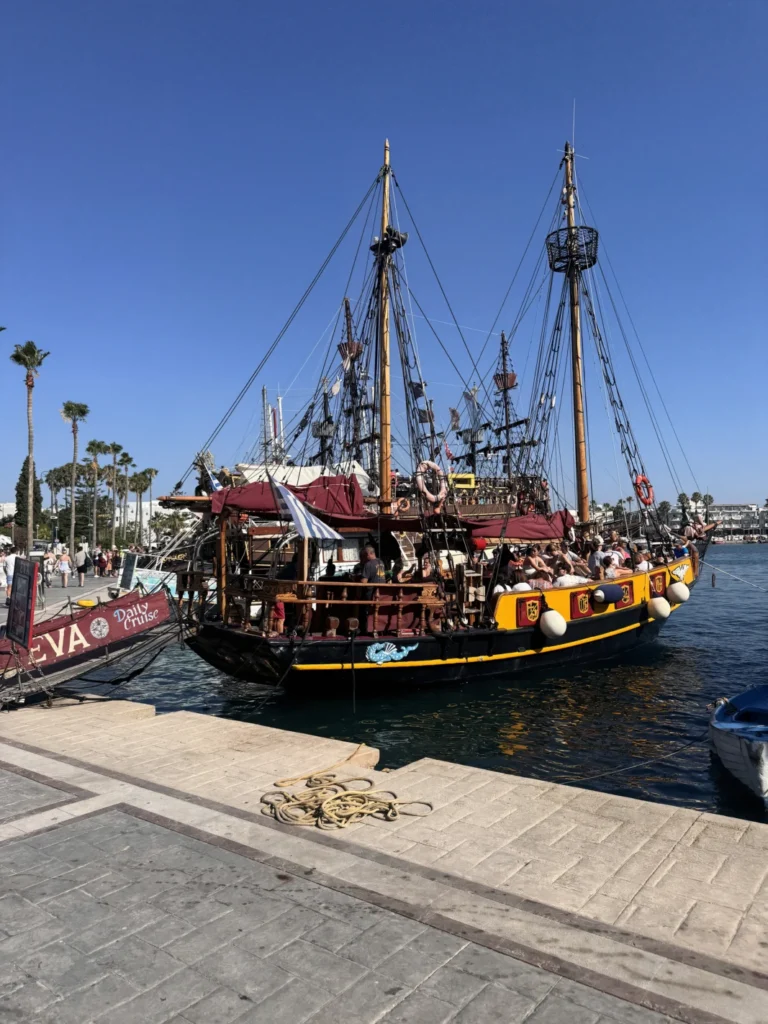
The classic day trip from Kos Town is a three-island cruise to Kalymnos, Pserimos and the tiny uninhabited islet of Plati. It’s an easy way to see a few more of the Dodecanese without having to plan ferries, and most cruises leave in the morning and are back by late afternoon. Some cruises include a barbecue lunch on Pserimos at the time of writing, so check what your ticket covers before you buy lunch elsewhere.
Late morning: Vathy on Kalymnos
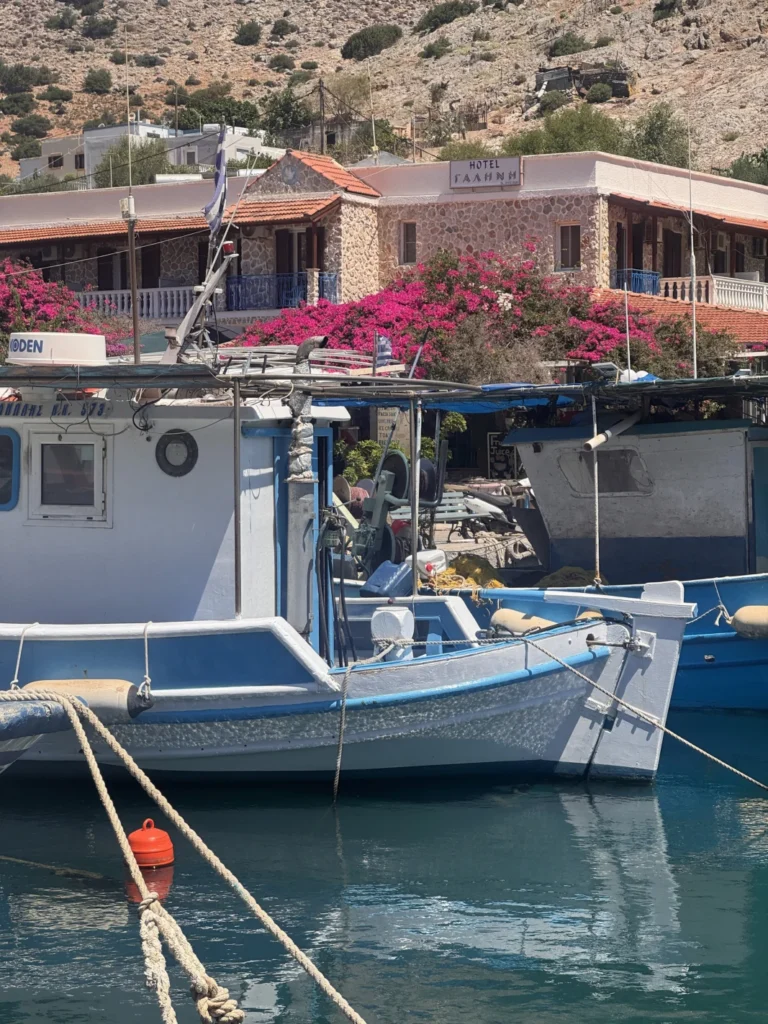
Our first stop was Vathy, on the east coast of Kalymnos. The boat sails up a long, narrow inlet between bare hillsides before opening out into a little harbour, which is why it’s often compared to a fjord. The water is a vivid shade of turquoise, and the harbour is lined with fishing boats, tavernas and bougainvillea.
Fun fact: Kalymnos is known as the island of sponge divers. For generations, its divers spent six or seven months a year at sea, and the earliest ones used a heavy flat stone called a skandalopetra to sink quickly to depths of around 30 metres while holding their breath. You’ll still see sponges for sale all over the island.
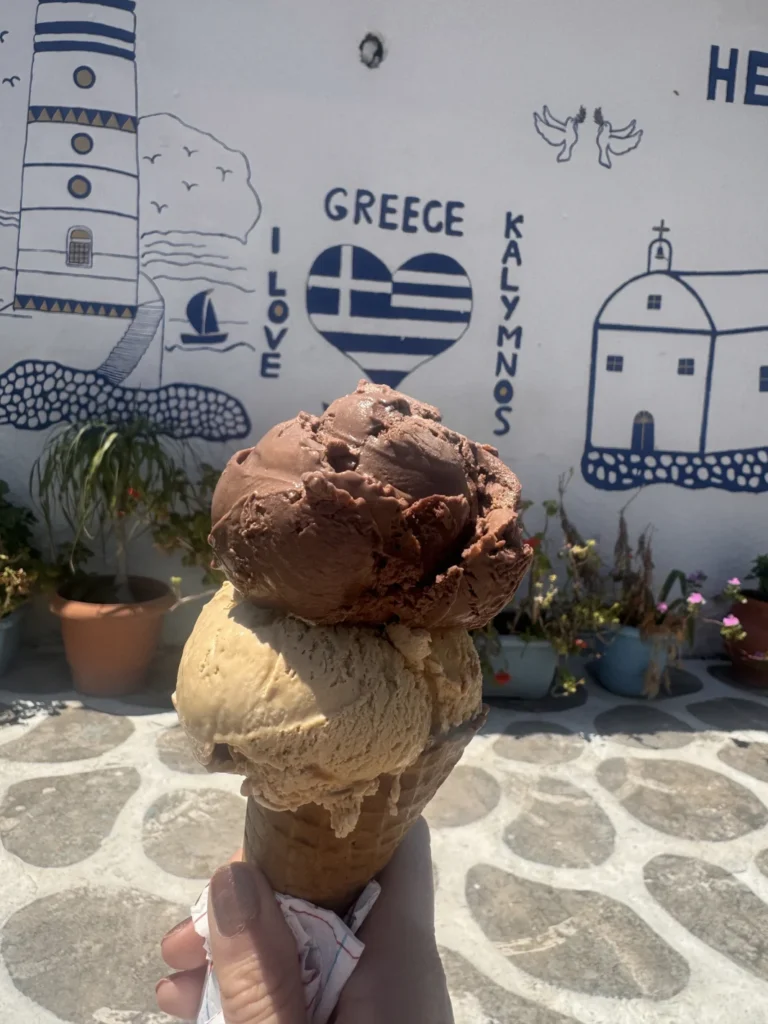
I had a wander round the harbour, a gyros plate for lunch and a scoop of ice cream in front of a very photogenic “I love Greece, Kalymnos” wall, then had a cold lemon radler back on deck as we set off again.
Afternoon: Pserimos
Our last stop was Pserimos, a small, quiet island between Kos and Kalymnos with a sandy beach right next to the harbour and a handful of tavernas. It’s the place to swim and slow down before the sail back. We were back in Kos Town by about 5pm.
Day two: quad biking and sunset in Zia
Morning: a quad safari into the mountains
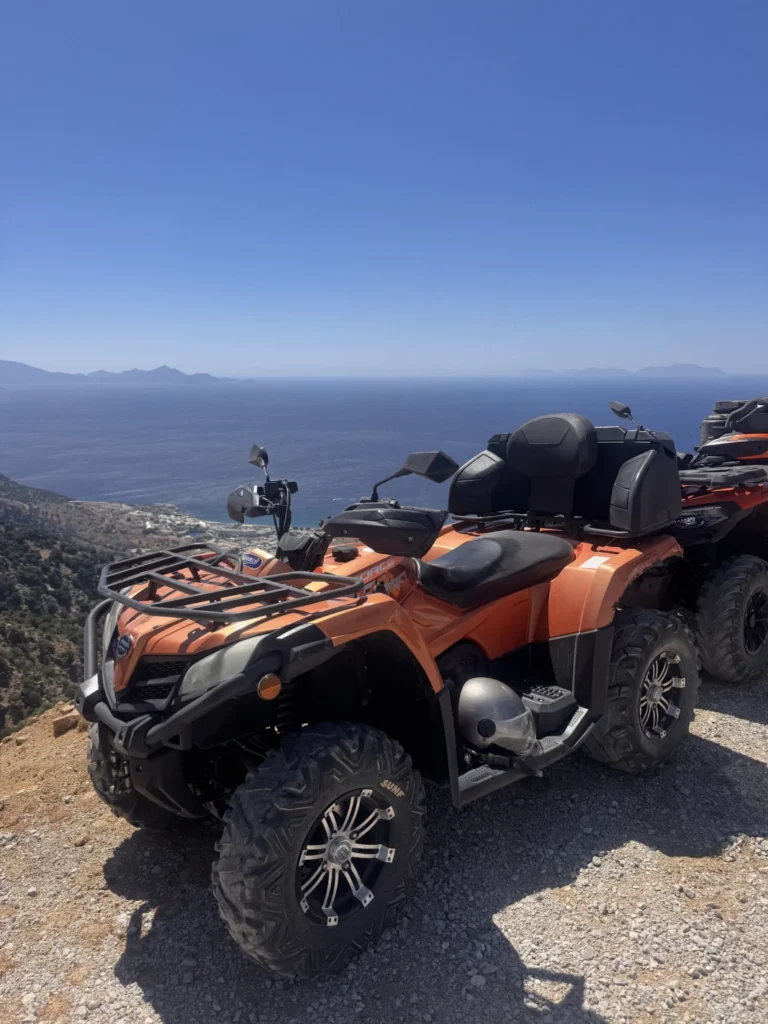
On day two I swapped the boat for a quad bike. I went with Safari Adventures, run by Moto Harley just north of Kos Town, and headed off-road into the hills of the Dikeos range, the mountainous spine of the island.
The tracks climb quickly, and from the top you look down over the coast and across the sea to the neighbouring islands. It’s a different side of Kos from the beach resorts, and a way to cover a lot of ground in a morning. If you’d rather book a guided quad or jeep tour in advance, GetYourGuide has a few options, and readers can get 5% off in the app with the code WEEKENDSANDAWAY5.
Late afternoon: the Natural Park of Zia
Later that day I headed up to Zia, a traditional village on the slopes of Mount Dikeos and the place everyone on Kos goes for sunset. I arrived early and spent some time at the Natural Park of Zia, a small, shady park among the pine trees where geese, ducks, rabbits and donkeys wander around and you can feed some of the animals. It’s open from 9am until 30 minutes after sunset, at the time of writing.
Afterwards I browsed the village itself, which is a steep cobbled lane lined with shops selling baskets, textiles and souvenirs. Two traditional watermills in the village are preserved as historic monuments. It gets busy as the sun goes down, so it’s worth arriving an hour or two early.
Evening: dinner at Oromedon and sunset over the islands
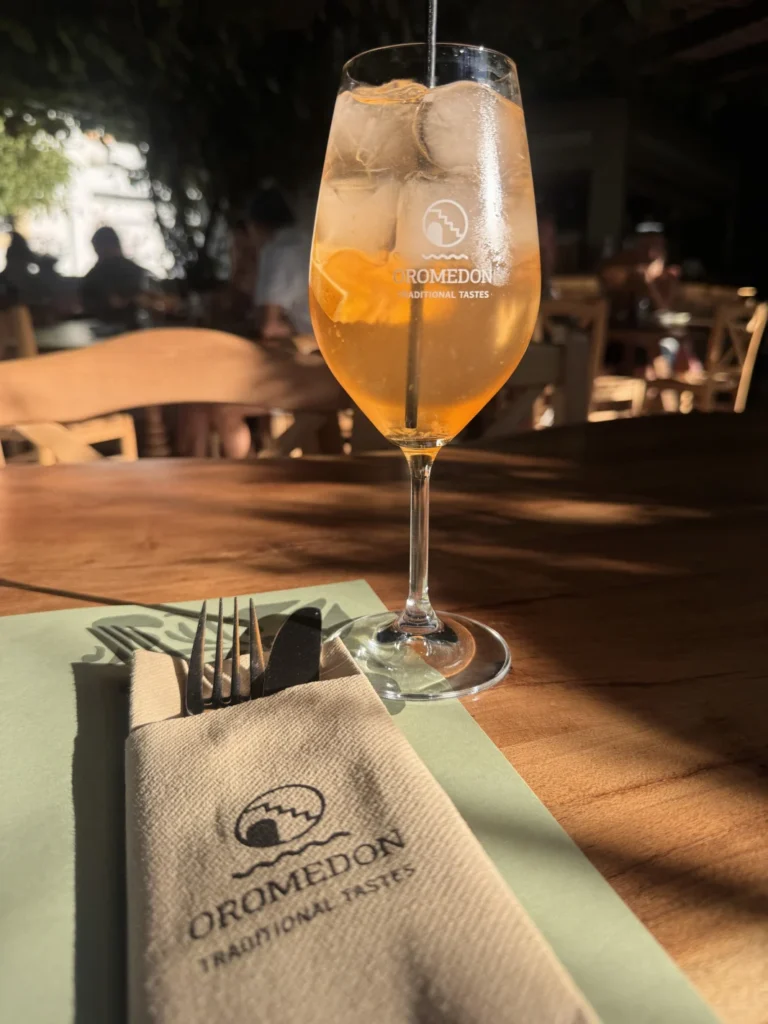
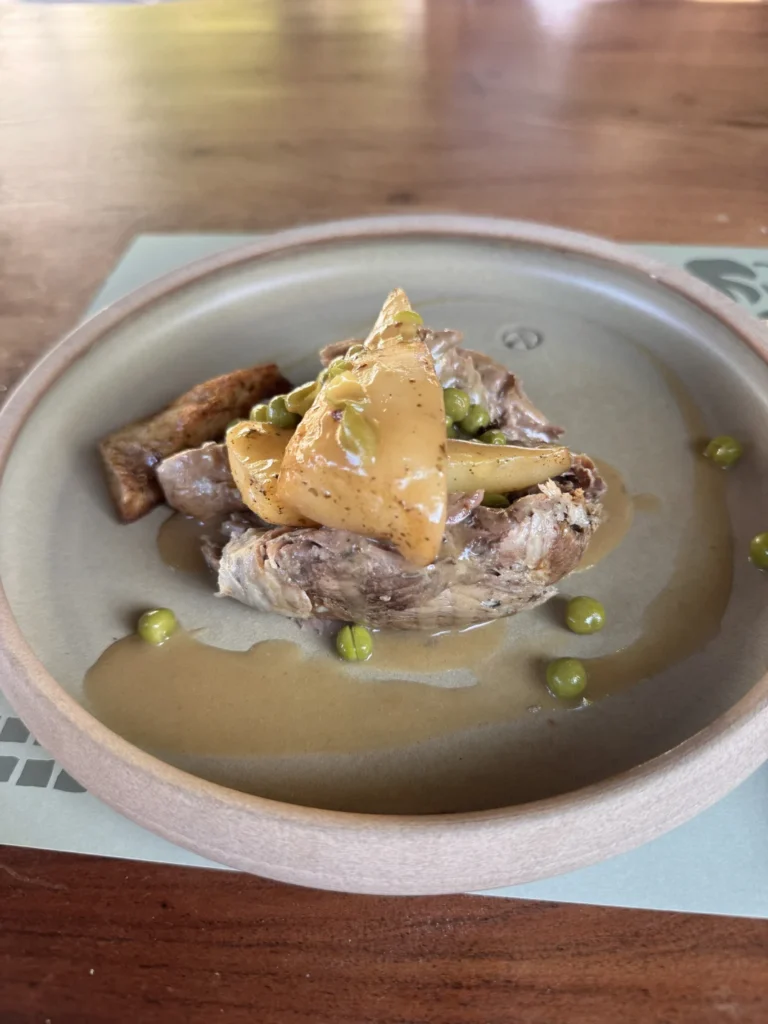
Dinner was at Oromedon, a family-run taverna that opened in 1997, with a terrace that looks out towards the sunset. It’s known for its wood-oven dishes, including slow-roasted lamb and goat, and for local specialities such as possa, a Kos goat’s cheese. I started with a spritz and then had one of the slow-cooked meat dishes.
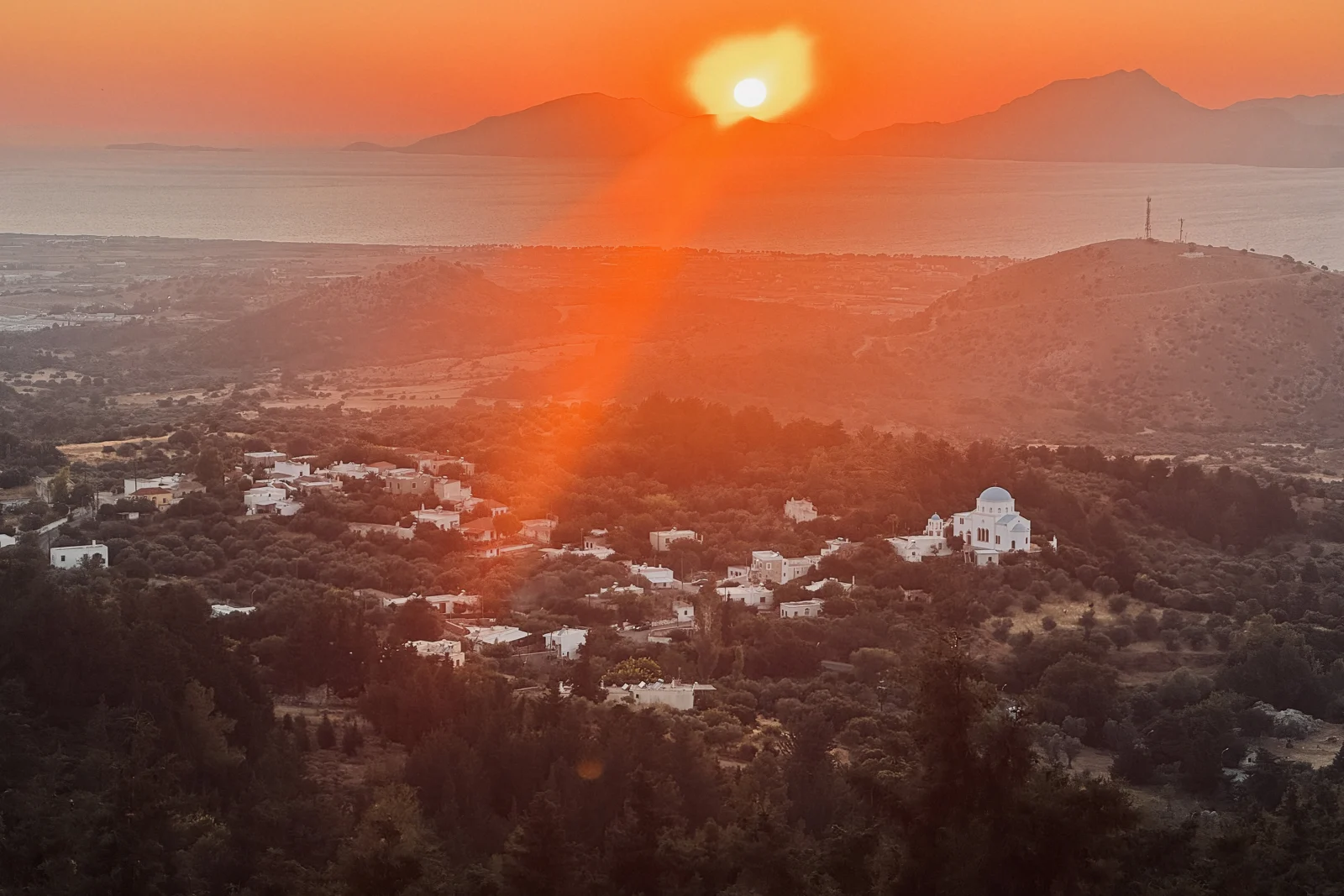
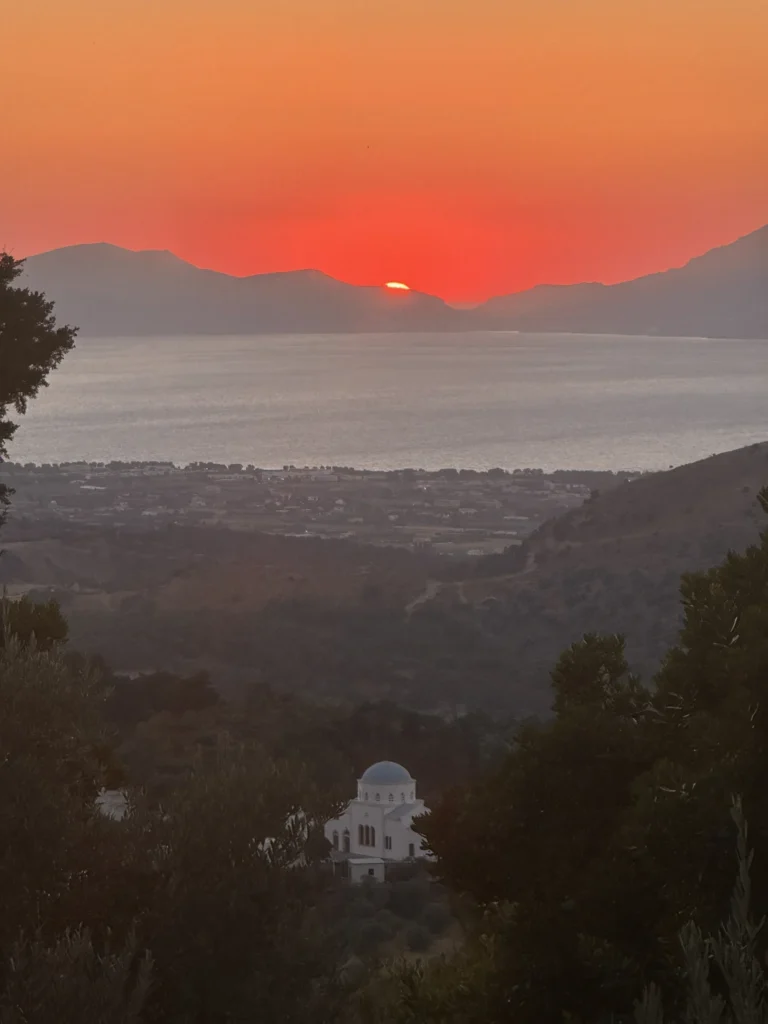
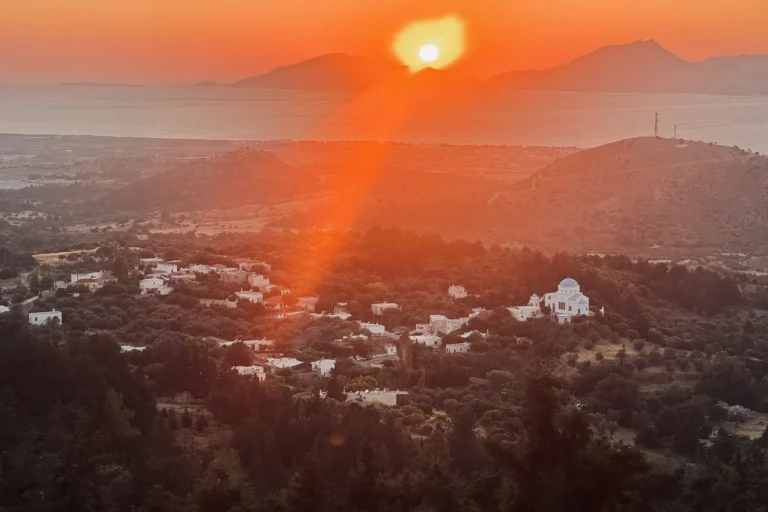
Then came the main event. From Zia’s terraces you look west over the plains to the sea, and the sun sets behind the islands on the horizon. It’s the busiest time of day in the village for a reason.
Day three: a day trip to the volcano on Nisyros
Morning: boat from Kardamena and the Stefanos crater
On day three I headed to Kardamena on the south coast, where the boats for Nisyros leave from, and about an hour later we were pulling into Mandraki, the island’s main village and harbour.
Nisyros is a volcanic island, and from Mandraki the road climbs up and over the rim into the caldera, which is about 4 kilometres across. Inside is the Stefanos crater, described by Visit Greece as one of the largest and best-preserved hydrothermal craters in the world. You can walk down a path into the crater itself, where the ground is pale and crusty, small vents hiss steam and there’s an unmistakable whiff of sulphur. The volcano’s last strong activity was in 1888.
Wear proper shoes rather than flip-flops, as the ground is rough and can be hot underfoot, and bring water and sun cream, because there’s very little shade.

Afternoon: lunch and a wander in Mandraki
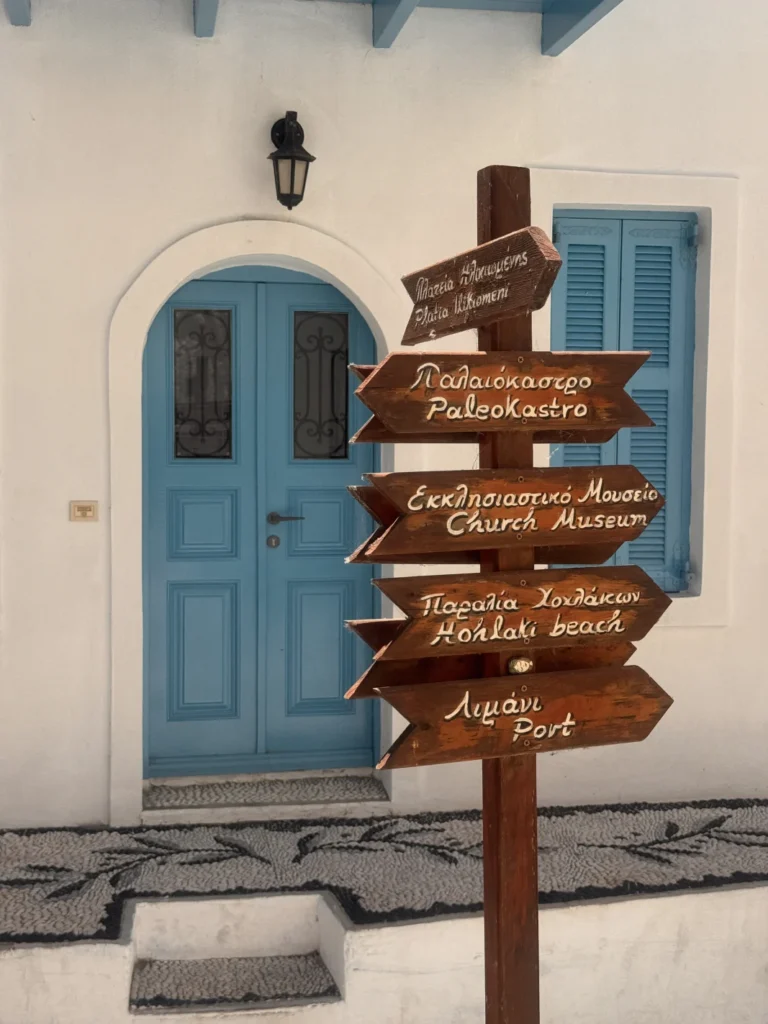
Back in Mandraki, I spent the rest of the afternoon wandering. It’s a village of whitewashed houses with blue doors and wooden balconies, narrow lanes, flower pots and hand-painted signposts pointing you to the beach, the church museum and the old castle. Above the village is the castle built by the Knights of St John in the 14th century, which also holds the monastery of Panagia Spiliani.
Lunch was grilled octopus and chips with a carafe of local white wine and a plate of fritters on the side. If you see pitia on a menu, order them: these chickpea fritters are a Nisyros speciality.

Evening: sunset on the Kos Town seafront
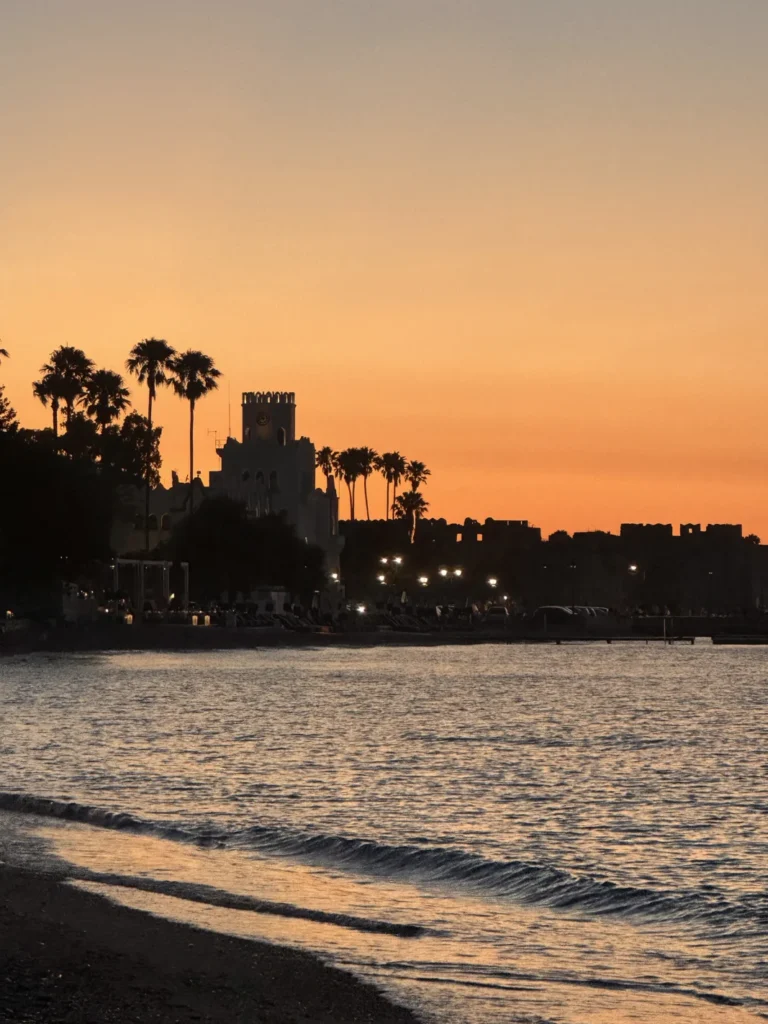
Back on Kos that evening, I had dinner at a taverna near the seafront, with a spread of dips and cheese and another carafe of house white. Then I walked down to the beach in town to watch the sun go down, with the yachts and the palm trees and towers of the Castle of the Knights in silhouette.
Day four: ancient Kos Town and the beach
Morning: Hippocrates’ plane tree and the Ancient Agora
I spent my last morning exploring the history right in the middle of Kos Town. Start at the Plane Tree of Hippocrates, a huge old tree propped up on supports in the square by the castle. Local tradition says that Hippocrates, the father of medicine, who was born on Kos, taught his students in its shade. The tree you see today isn’t quite that old, though: the municipality says a plane tree can’t live much more than five centuries, so it may have grown from the roots of an earlier one.
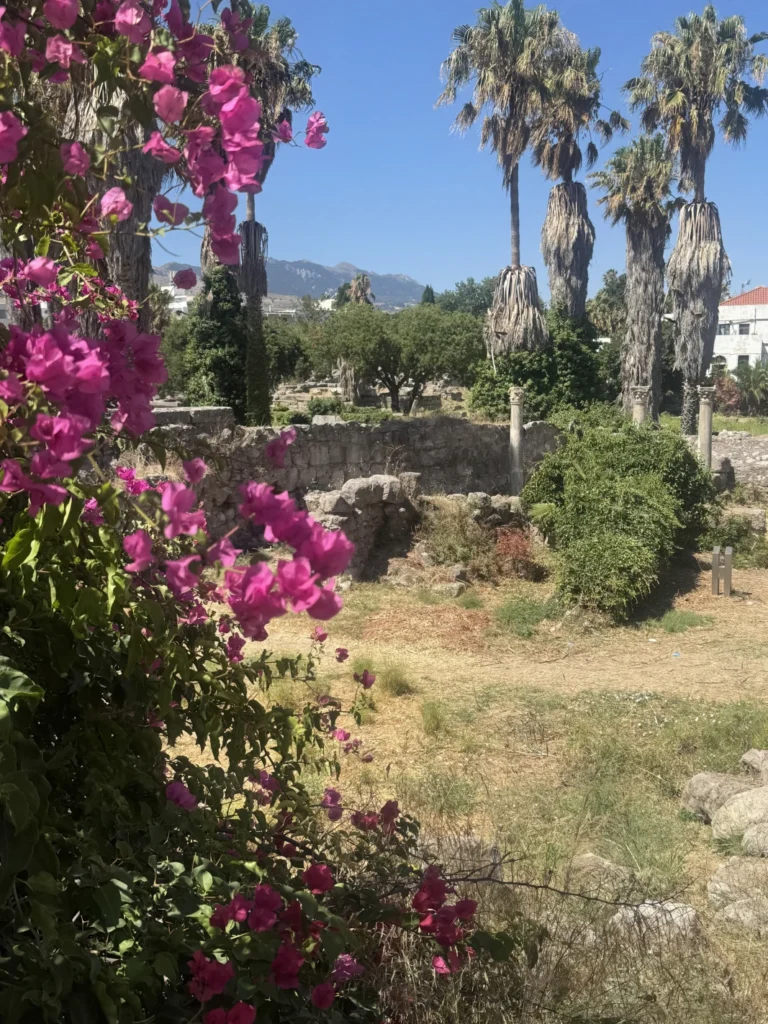
Right next to it is the entrance to the Ancient Agora, the city’s old marketplace, which dates back to the 4th century BC. It was excavated by Italian archaeologists while the town was being rebuilt after a major earthquake in 1933, and today it’s one of the largest excavated sites of its kind in Greece. It’s free to wander through, and in July there were palm trees and bougainvillea in flower among the columns and fallen stones.
Late morning: the Western Archaeological Site
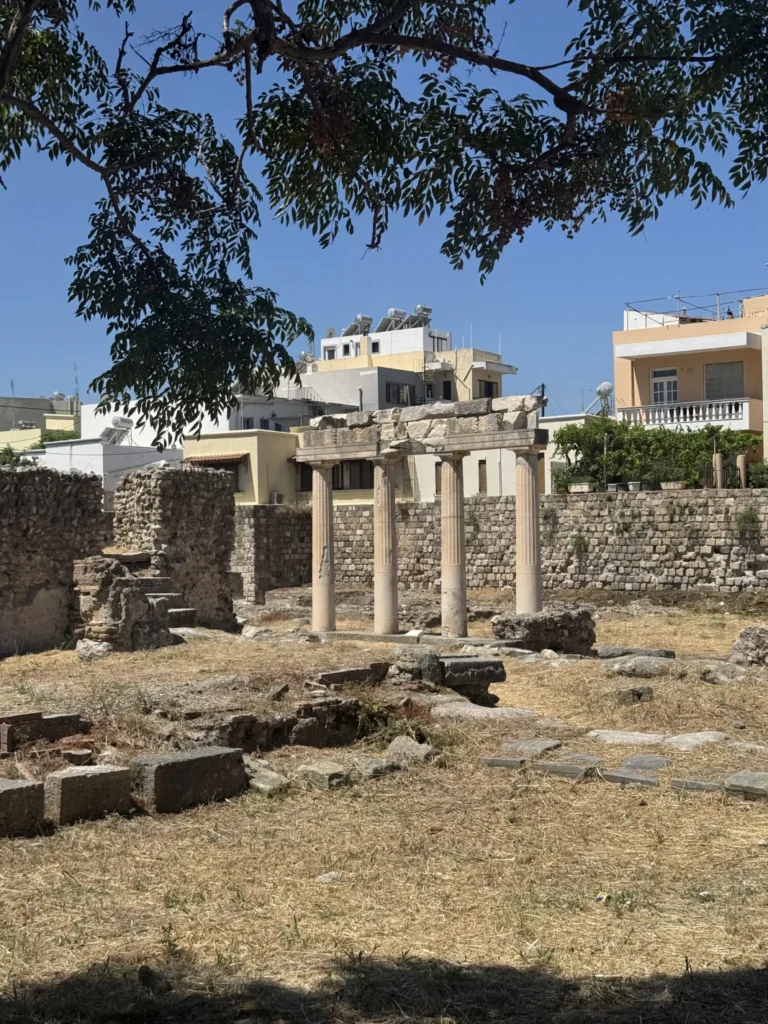
A ten-minute walk away is the Western Archaeological Site, another open area of ruins uncovered after the 1933 earthquake. Look out for the Xystos, a row of restored columns from the ancient gymnasium, a stretch of the old Roman main road, and the 2nd-century Roman Odeon, a small theatre that once seated around 750 people.
Afternoon: lunch at Lambi beach
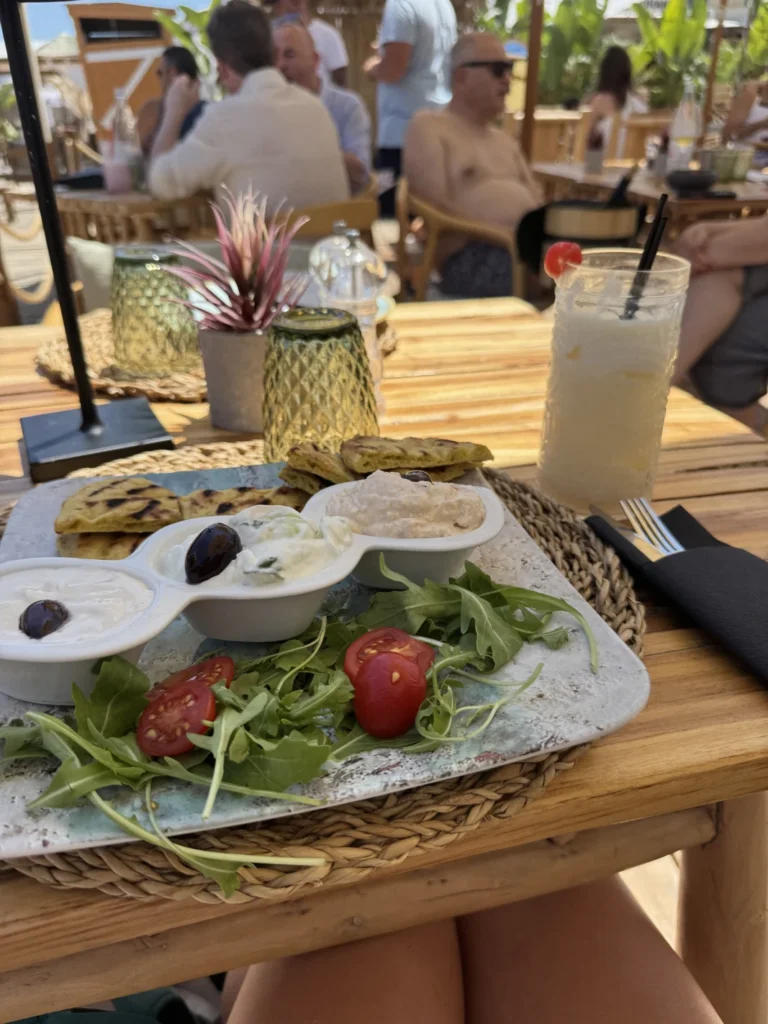
For my final afternoon I headed to Lambi beach, about 3 kilometres north of the town centre and easy to reach by bike. It’s a long Blue Flag beach with sunbeds, beach bars and free shade under the tamarisk trees in places. I had lunch at COCO by the Sea, a beach bar on the sand, with a cold drink and a plate of dips and salad.
Where to eat and drink in Kos
Here’s a quick recap of where I ate and drank over the four days:
- Vathy, Kalymnos: a gyros plate and an ice cream on the harbour during the island cruise.
- Oromedon, Zia: a spritz and slow-cooked meat on the terrace, timed for sunset.
- Mandraki, Nisyros: grilled octopus, chips, fritters and local white wine.
- Kos Town: Greek dips, cheese and house wine at a seafront taverna.
- COCO by the Sea, Lambi beach: dips, salad and cold drinks at a beach bar.
Tips for 4 days in Kos
- Stay in Kos Town if you want to island hop. Most day cruises leave from the main harbour, although Nisyros boats usually go from Kardamena.
- Hire a bike. Kos Town is flat, with cycle lanes along the seafront, and it’s the easiest way to get between the old town and the beaches.
- Go to Zia for sunset, but arrive early to look round the village and get a good table.
- Wear closed shoes in the Stefanos crater and take plenty of water, as there’s very little shade.
- Visit the ruins in the morning. The Ancient Agora is free, but there’s little shade and it gets very hot by midday in July.
- Check flights early. Jet2 flies to Kos from several UK airports in summer, and you can compare routes on Jet2.com. See my hand luggage only packing tips if you’re travelling light.
- Make your annual leave go further. A four-day trip like this only needs two days off if you go over a weekend, and my 2027 bank holiday planner shows how to stretch it even more.
You’ll find the travel companies I recommend on my resources page.
4 days in Kos FAQs
Is 4 days enough in Kos?
Yes. Four days is enough to see Kos Town’s ancient sites, spend an evening in Zia and fit in two day trips by boat, as in the itinerary above. Add a few more days if you want proper beach time.
Where is the best place to stay in Kos?
Kos Town is the best base for a short trip, as it’s close to the harbour, the ancient sites, restaurants and Lambi beach. Resorts such as Kardamena, Tigaki and Marmari are better for a beach-focused holiday.
Can you visit Nisyros from Kos?
Yes. Day trips to Nisyros usually leave from Kardamena, take around an hour each way and include time at the Stefanos volcano crater and in Mandraki village.
Is the Ancient Agora in Kos free?
Yes, at the time of writing the Ancient Agora in Kos Town is free to walk around, with last entry at 7:30pm.
Where is the best sunset in Kos?
Zia, a mountain village on the slopes of Mount Dikeos, is the most famous sunset spot on Kos, with views west over the sea and neighbouring islands.
More European breaks


Over to you
Leave a comment